Are Cats the Ancient Gods They Are Enigmatically Claimed to Be?
- Jun 26, 2025
- 3 min read
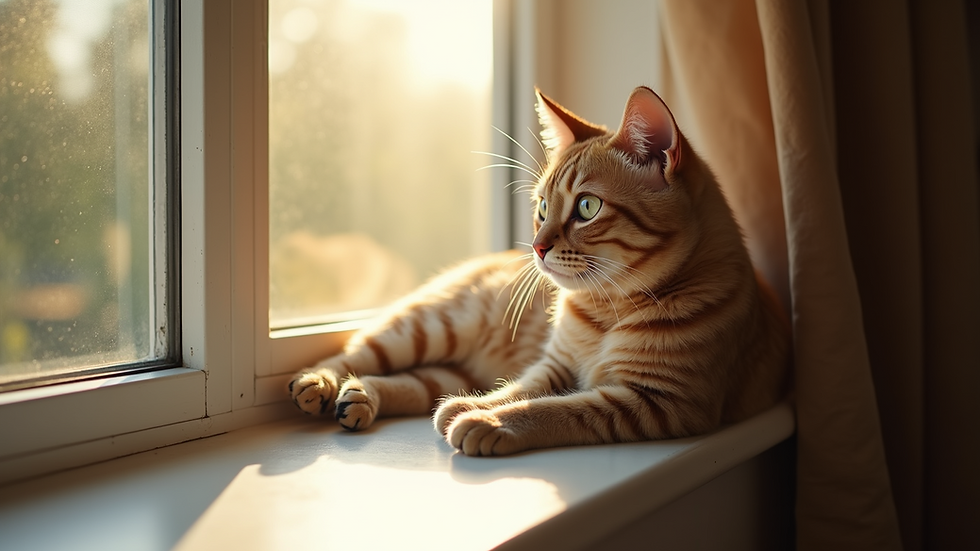
Have you ever found yourself captivated by the way your cat lounges lazily, with an air of superiority that suggests a hidden wisdom? Cats saunter through our homes as though they own every room, leaving us to guess at what secrets they might be pondering. Their presence in our lives might hint at something deeper. Across history, many cultures have regarded cats as sacred beings, often likening them to deities.
A Brief Historical Background
Cats have played a significant role in human history. The Egyptians are perhaps the most famous cat enthusiasts, venerating the goddess Bastet. She was often depicted as a lioness or a woman with a lioness head, symbolizing protection, fertility, and home. This reverence stemmed not only from cats’ hunting skills, which kept grain supplies safe from rodents, but also from their companionship.
In ancient Egypt, the penalty for killing a cat was severe, often equated to murder. Wealthy families even mummified their feline companions and buried them in elaborate tombs, sometimes adorned with jewelry, to honor their importance. This strong reverence prompts the question: are our modern-day pets simply living reminders of this ancient devotion?
Eccentric Behaviors of Cats
Cats demonstrate a variety of fascinating behaviors that could be perceived as god-like. Their renowned ability to land on their feet after a fall—a skill known as the "righting reflex"—is almost magical. Additionally, studies show that cats can detect vibrations associated with seismic activity, allowing them to sense earthquakes before they occur. This suggests an uncanny awareness of their environment that might seem otherworldly.
Folklore often depicts cats as guardians of secrets, which aligns with their mysterious demeanor. Their nocturnal habits and playful antics might leave us pondering: are they simply supporting us with their companionship, or do they have a deeper understanding of the world around us?
The Magic Within Their Purr
The hum of a cat's purr is often described as a comforting sound, akin to a soothing hand on the shoulder. Recent scientific research indicates that purring frequencies, typically between 25 and 150 Hertz, could promote healing by stimulating bone regeneration. Studies have shown that these vibrations may reduce inflammation and even alleviate pain in humans.
This remarkable ability lends credence to the idea that cats harbor special powers. Perhaps they are not just our beloved pets but ancient beings that offer their gentle energy and wisdom during our stressful moments.
Felines in Popular Culture
Cats continue to leave their mark on modern culture, often appearing as enigmatic figures in books and movies. The Cheshire Cat from "Alice’s Adventures in Wonderland" perfectly encapsulates their mysterious essence, with its wide grin and ability to disappear at will. Similarly, the magical felines in J.K. Rowling's "Harry Potter" series add to the allure surrounding these creatures.
By portraying cats in such a whimsical light, popular culture reinforces the notion of cats as ancient gods, occupying a unique place in our homes while helping us navigate life’s complexities.
Final Thoughts
While cats might not be literal deities, their profound historical significance and unusual behaviors prompt us to consider their almost divine presence in our lives. Whether they are aware of their impactful roles or simply enjoy our attention, it is clear that our feline companions enhance our day-to-day existence with their unique charms.
So next time you notice your cat quietly observing the room, consider the notion that they are not just gazing absentmindedly. They may be watching over us, the mere mortals, in their little kingdom.



Comments