How to Introduce a Leash to a Puppy in 8 Easy Steps
- Oct 13, 2025
- 2 min read
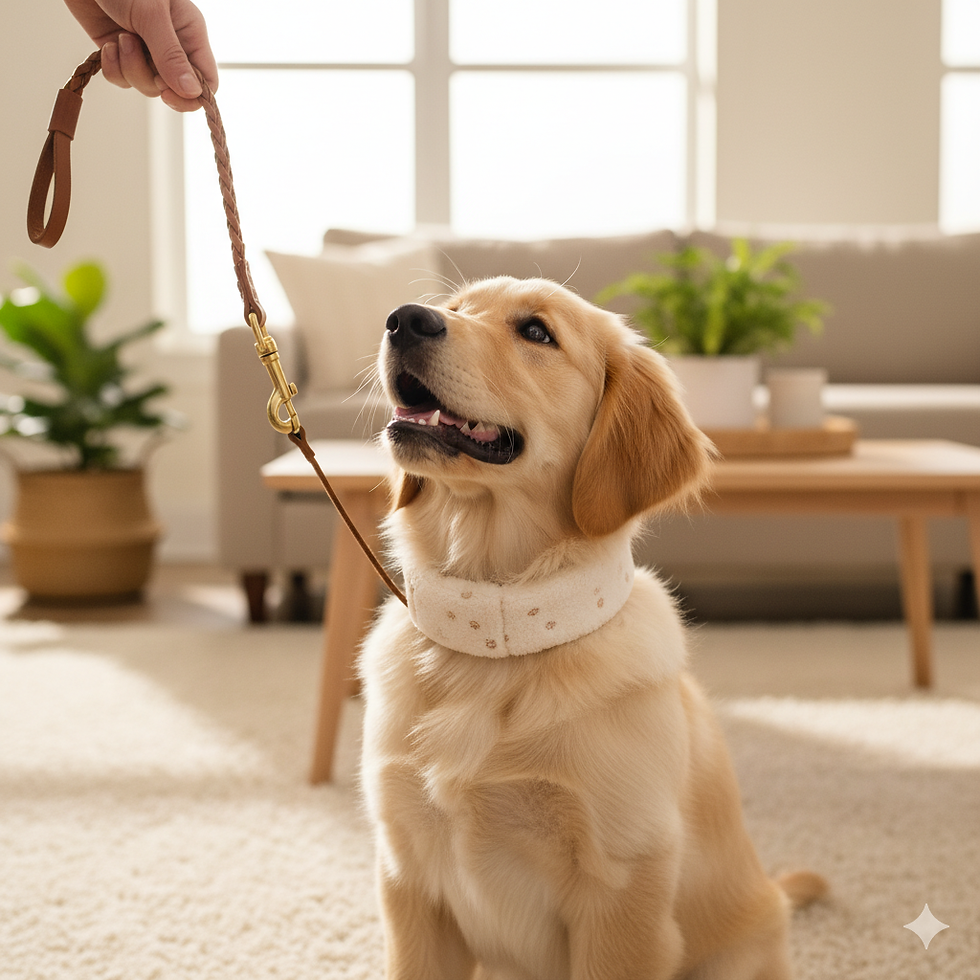
Why Leash Training Matters
Leash training isn’t just about control — it’s about communication and trust. Introducing the leash early helps your puppy feel confident, safe, and connected to you during walks. Without it, daily outings can become frustrating for both of you.
Step 1: Get the Right Leash and Collar

Before training begins, choose equipment that suits your puppy’s size and breed.
Collar: Soft, adjustable, and not too tight. You should fit two fingers between the collar and neck.
Leash: Lightweight, around 4–6 feet long, and easy to handle. Avoid retractable leashes during training — they encourage pulling.
🐶 Pro Tip: Introduce the collar first for a few days before adding the leash. Let your puppy wear it indoors for short periods.
Step 2: Let Your Puppy Explore the Leash Indoors

Attach the leash and let your puppy drag it around under supervision. This helps them get used to the feeling and sound of it without pressure. If they bite or play with it, calmly redirect them with a toy or treat — don’t scold.
Keep sessions short (5–10 minutes) and positive.
Step 3: Associate the Leash with Rewards

Make the leash a happy signal — not a restriction. Every time you clip it on, give treats, praise, or playtime. You’re teaching your puppy: “Leash = Fun.”
You can even say a cue like “Let’s go!” before every training session to build excitement and consistency.
Step 4: Practice Walking Indoors First

Start in a quiet space like your living room or hallway. Encourage your puppy to walk beside you — use treats or a favorite toy as a lure. If they pull, stop walking and wait until the leash relaxes, then continue. Patience here sets the foundation for outdoor walks.
✅ Keep early sessions under 10 minutes — puppies have short attention spans.
Step 5: Move Training Outdoors (Low-Distraction Areas)

Once your puppy walks calmly indoors, step outside — but start small. Try your backyard or a quiet street, not a busy park. Let your pup sniff and explore a bit; it helps them adjust to new sights and smells.
When they pull or get distracted, gently redirect them using treats or by changing direction. Stay calm and encouraging.
Step 6: Reward Calm Walking
Always reward calm behavior. Use small, high-value treats for every few steps your puppy walks beside you. Gradually increase the distance between rewards as they improve. This positive reinforcement builds good habits fast.
🎯Remember: consistency > intensity. Daily 5-minute sessions beat one long weekly session.
Step 7: Common Mistakes to Avoid

❌ Pulling the leash when they resist — it creates fear.
❌ Skipping indoor practice — outdoor distractions make it harder.
❌ Using punishment — positive methods work faster and last longer.
If your puppy freezes, sits, or resists, take a break. Training should be fun, not forced.
Step 8: Make Leash Time Bonding Time
End each session on a positive note — play, cuddle, or short praise time. You’re not just training; you’re building a lifelong connection. A confident, calm dog on a leash starts with trust, not control.
Key Takeaways
Start leash training early — even 8–10 weeks old.
Use short, happy sessions.
Reward every bit of calm behavior.
Progress slowly from indoors to outdoors.

With patience, your pup will soon walk proudly by your side — tail wagging, leash loose, and heart full.

Comments